multimodal
multi
mod
al
e
What does multimodal really mean?

Featured Case Studies

Our Work, Your Success

What clients say after the work is done.

Real engagements.
Real outcomes.

A selection of recent projects across biotech, healthcare, fintech, retail and beyond — each delivered with senior judgement and execution muscle.

Martech / Emotion AI
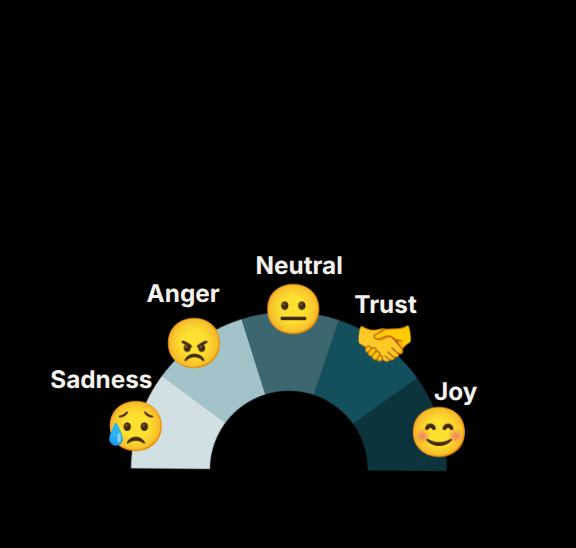
Emotional Analysis Tool
Beyond sentiment to true emotional intelligence.
Enterprise
Pharma / Life sciences
Multi-Omics Biomarker Discovery
Leading European medical university.
Research
Surgical AI / Healthcare
Surgical Video Segmentation
Real-time anatomical guidance.
Scale-up
Proptech / Real estate
Real-estate Recommendation Engine
Modernised buying and renting.
Scale-up
Legal tech
eParalegal AI Assistant
Intelligent document analysis for legal professionals.
Startup
Biotech / Genomics
Single-cell Multi-omics
Precision medicine platform.
Research
Your brand here.
Limited Q3 2026 slots remaining

Ready to move from
strategy to impact?

We take on a limited number of engagements per quarter to ensure every client receives partner-level attention. Honest, direct, and always commercially grounded.

Q3 2026 — 2 slots remaining
Request a Discovery Call

Emotional Analysis Tool

Beyond Sentiment to True Emotional Intelligence

Challenge

Marketing agencies struggled with traditional sentiment analysis that only provided surface-level insights, categorising reactions as positive, negative, or neutral. This approach missed the nuanced emotional spectrum behind customer reactions, creating a critical gap in marketing analytics that prevented brands from distinguishing between emotions like happiness versus trust, or anger versus disgust within the same sentiment category.

Solution

We developed a comprehensive emotional analysis tool using a multi-layered approach combining Naive Bayes classification for baseline emotional categorisation, lexicon-based analysis with emotion-specific dictionaries, and advanced machine learning algorithms with deep learning capabilities. The system underwent rigorous validation across real-world campaigns from major brands, ensuring robust performance and cultural sensitivity in emotional detection.

Results

  • 40% higher engagement rates vs traditional sentiment analysis
  • Improvement in strategic decision confidence
  • Performance boost through real-time optimization
  • Competitive advantage in emotional resonance metrics
  • Enhanced brand loyalty and customer retention
  • Reduced campaign testing time
  • Increased ROI across all marketing channels
  • Allows further understanding of segmented campaigns by emotional engagement
Emotional Analysis Tool Case Study
"This emotional analysis tool transformed our marketing approach. We moved from guesswork to emotional targeting, creating campaigns that truly resonate with our audience's deeper feelings."
Marketing Director

Anonymous

Strategy Director, Marketing agency

Longitudinal Single-cell Multi-omics

Precision Medicine Platform

Challenge

Longitudinal single-cell multi-omics data presented unprecedented computational challenges combining massive scale, extreme sparsity, and complex integration requirements. Single-cell multi-omics data are challenging enough on their own, while the longitudinal element adds further complexity. Researchers are faced with overwhelming memory and computational demands when tracking multiple molecular layers across timepoints, while existing methods struggled with the integration dilemma of combining different modalities of single-cell data (e.g. scRNA-seq, scATAC-seq).

Solution

We implemented the PALMO platform using intermediate integration strategy that balanced computational efficiency with biological insight. The comprehensive solution featured five analytical modules: variance decomposition analysis, coefficient of variation profiling, stability pattern evaluation across cell types, outlier detection for abnormal events, and time course analysis for individual participant tracking. This approach preserved individual omics characteristics while capturing cross-modality interactions effectively.

Results

  • Obtained a clearer understanding of how key assays change across time
  • Identified molecular signatures of cellular aging processes
  • Utilised time series analysis techniques to understand the longitudinal associations of single-cell data
  • Explored, investigated and evaluated late, entry and intermediate data integration solutions.
Longitudinal Single-cell Multi-omics

Multi-Omics Disease Biomarker Discovery

Leading European Medical University

Challenge

Traditional diagnostic approaches relied on invasive procedures that were costly, uncomfortable, and risky for patients, while single-omics approaches consistently missed complex molecular interactions and disease mechanisms. The medical research community needed comprehensive non-invasive biomarker discovery methods that could transform disease diagnosis and patient care by integrating multiple biological layers to reveal disease-specific molecular signatures invisible to individual data type analysis.

Solution

We implemented a systematic multi-omics approach integrating transcriptomics, metabolomics, proteomics, and clinical data through three complementary strategies. Our methodology included differential expression analysis with GSEA pathway enrichment, comprehensive metabolite pathway analysis, and systematic clinical parameter correlation. We employed combined omics integration, correlation-based network analysis, and advanced machine learning approaches to identify complex patterns across multiple data types and biological systems.

Results

  • Identified a potential biomarker panel outperforming individual markers
  • Discovered novel disease mechanisms missed by single-omics approaches
  • Identified a combination of biomarkers across different modalities through Multi-Omics Factor Analysis
  • WGCNA analysis revealed connections and associations between biomarkers of different modalities
  • Metabolomic and genomic pathway analysis through enrichment analysis
Multi-Omics Disease Biomarker Discovery
"The analysis of multi-omics has enhanced our understanding of the underlying biological functions of the disease and enabled the potential use of non-invasive biomarkers that can revolutionise disease diagnosis and patient care."
Marketing Director

Anonymous

Professor, Medical university

AI-Powered Surgical Video Segmentation

Real-Time Anatomical Guidance

Challenge

Endoscopic surgeries face critical visualisation challenges where distorted or unclear camera views can compromise surgeons' ability to accurately identify vital anatomical structures during complex procedures. The technical obstacles were formidable: processing massive volumes of surgical video data with extreme computational demands, handling severe class imbalance where critical structures like nerves occupy minimal frame space, and achieving real-time performance requirements of 30+ frames per second without disrupting surgical workflow.

Solution

We developed a comprehensive AI platform combining cutting-edge architectures with surgical-domain expertise, allowing for real-time video segmentation. The data engineering foundation involved systematic collection of multiple endoscopic surgery videos, intelligent keyframe extraction reducing 15,000 frames to 550 critical moments per video clip, meticulous hierarchical annotation validated by external experts. The quality and quantity of the data were increased by implementing data augmentation, allowing for the development of a robust model. The dual-model architecture leveraged YOLO for rapid object detection and FasterNet for efficient segmentation, supplemented by transformer-based models capturing spatial-temporal dependencies. Our colour-coded overlay system provides intuitive real-time visualisation that seamlessly integrates with existing endoscopic equipment.

Results

  • Achieved 76%+ accuracy for critical structure identification for small and larger organs
  • Enabled true real-time processing at 30 frames per second with inference capabilities ranging 5-298 FPS
  • Seamlessly integrated with existing surgical workflows without disrupting established protocols
AI-Powered Surgical Video Segmentation
"This human-AI collaboration system amplifies rather than replaces surgical expertise, providing intelligent validation that ensures every surgical decision benefits from accurate, instantaneous visual data."
Marketing Director

Georg M.

Director, startup

Real-estate Recommendation Engine

Modernised buying and renting properties

Challenge

Traditional property search platforms forced users to manually filter through dozens of criteria, spending countless hours comparing neighbourhoods, school ratings, crime statistics, hospital proximity, and transportation options across separate websites. The fragmented data landscape meant critical decision factors like community safety scores, air quality indices, local amenities, and future development plans remained scattered across government databases, news sources, and real estate listings. Families and professionals needed a unified intelligent system that could understand nuanced preferences like "safe neighborhood with good schools near a university hospital" while simultaneously analyzing property values, commute times, environmental factors, and long-term investment potential.

Solution

We developed an AI-powered property discovery engine integrating 15+ multi-modal data sources through natural language processing and geospatial analysis. The platform aggregates real-time data from property listings, government crime databases, education performance metrics, healthcare facility ratings, transportation networks, environmental sensors, and demographic trends into a unified search experience. Our conversational AI agent interprets complex user queries, automatically mapping requirements to weighted scoring algorithms that evaluate properties across safety indices, school quality ratings, hospital proximity, public transport accessibility, and neighborhood liveability scores. The system employs machine learning to continuously refine recommendations based on user interactions, market trends, and emerging neighborhood data.

Results

  • Reduced property search time from weeks to days through intelligent filtering
  • Integrated 15+ data sources including crime statistics, school ratings, hospital networks, and environmental metrics
  • AI-generated property recommendations matching lifestyle priorities
  • Processed natural language queries in understanding complex multi-criteria preferences
  • Provided neighborhood risk assessments combining crime data, flood zones, and development plans
  • Generated comprehensive property scoring across livability factors
Real-estate Recommendation Engine

eParalegal AI Assistant

Intelligent Document Analysis for Legal Professionals

Challenge

Legal professionals spend a disproportionate amount of time manually reviewing large volumes of documents, contracts, correspondence, and case evidence to extract critical information. Identifying key dates, stakeholder relationships, obligations, and pivotal clauses across hundreds or thousands of pages is error-prone and time-intensive, often leading to missed details that can impact case outcomes. Smaller firms and individuals navigating legal proceedings face an even steeper challenge, lacking the resources to hire dedicated paralegal teams for thorough document analysis and case preparation.

Solution

We built an AI-powered paralegal agent that ingests documents, evidence files, and legal correspondence to automatically extract and structure critical case information. The system leverages natural language processing and named entity recognition to identify key dates, deadlines, stakeholders, contractual obligations, and relevant legal precedents across diverse document formats. It generates structured summaries, chronological timelines, stakeholder maps, and comprehensive case reports, all presented in a clear, professionally formatted output ready for legal review. The agent continuously learns from user feedback to improve extraction accuracy and adapts to domain-specific legal terminology and document conventions.

Results

  • Reduced document review time compared to manual paralegal workflows
  • Automated extraction of key dates, deadlines, and contractual milestones across thousands of pages
  • Generated structured case summaries and stakeholder relationship maps in minutes
  • Supported multiple document formats including PDFs, scanned images, emails, and legal filings
  • Enabled individuals and smaller firms to access paralegal-grade document analysis without dedicated staff
  • Improved case preparation consistency and reduced risk of overlooked evidence
eParalegal AI Assistant